Everglades History & the Army Corps
The Kissimmee River: Straightened by the Corps, Then Brought Back
In the 1960s a winding river at the head of the Everglades was turned into a straight canal. Decades later, the same agency helped put the bends back.
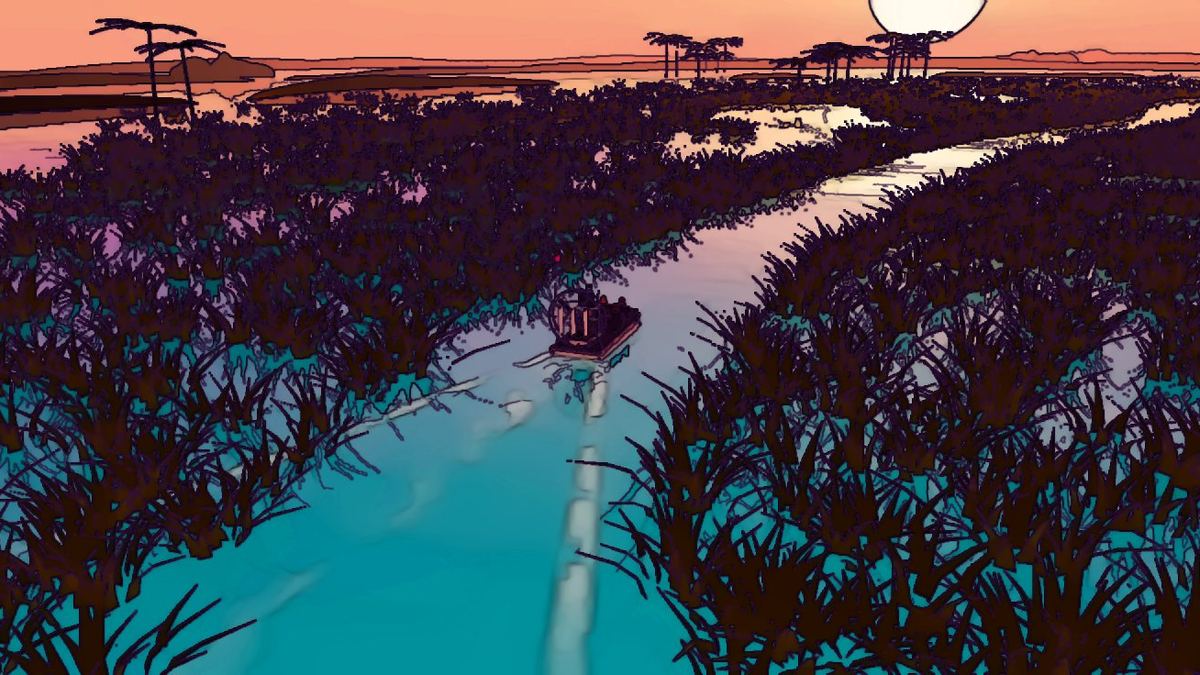
The Everglades begins far north of Miami, in the chain of lakes near Orlando. From there the Kissimmee River once wandered more than a hundred miles through a broad floodplain before reaching Lake Okeechobee. Its slow, looping course flooded wet prairies that supported huge numbers of wading birds and waterfowl.
A canal called C-38
As part of the Central and Southern Florida Project, the U.S. Army Corps of Engineers channelized the river between 1962 and 1971. The meandering river was replaced by a straight, deep canal about 56 miles long, known as C-38, controlled by a series of water-control structures. The goal was flood protection for the growing upper basin.
What was lost
The canal worked as a flood channel, but the floodplain wetlands dried out. Biologists documented steep declines in wading birds and waterfowl that had used the river valley, and the faster flow carried nutrients from ranches and farms more directly into Lake Okeechobee. Almost as soon as the canal was finished, people began asking whether it could be undone.
An historic reversal
In 1992 Congress authorized the Kissimmee River Restoration Project, a partnership between the Corps and the South Florida Water Management District. Over the following decades, crews backfilled long stretches of C-38, reconnected old river bends and restored flows across the floodplain. The project was celebrated as complete in 2021, having restored dozens of miles of the historic river channel and tens of thousands of acres of wetlands.
Why it matters
The Kissimmee is often cited as one of the largest river restoration projects in the world, and as proof that big engineering decisions in the Everglades can be revisited. Wading birds and fish returned quickly to restored sections, encouraging planners working farther south.
How the restoration worked
Restoring a river is not as simple as filling in a canal. Engineers had to remove water-control structures, reconnect remnant river channels that had been cut off for decades and reshape the floodplain so water could spread across it again. In some sections, crews re-carved river bends that had silted in. Water management rules upstream were also changed so the river would receive more natural, seasonal flows.
Nature responds
As water returned to the floodplain, wetland plants came back, oxygen levels in the river improved and fish populations shifted toward native species that prefer flowing water. Wading birds and waterfowl returned to the restored marshes. Scientists have closely monitored the river for years, making it one of the best-studied restoration projects anywhere.
Lessons for the Everglades
- Restoration takes time: the project spanned decades from authorization to completion.
- Partnerships matter: federal and state agencies shared costs and responsibilities.
- Monitoring proves results: measurable recovery helped build support for later projects.
Still connected downstream
The restored Kissimmee still flows into Lake Okeechobee, and from there into the managed system of the Hoover Dike and Army Corps canals. Its recovery is one piece of a larger puzzle that runs all the way to Florida Bay.
Sources & further reading
Keep reading
 Everglades History & the Army Corps
How Everglades National Park Came to Be
A landscape architect, a journalist and a president: the people behind the 1947 dedication of the first national park created to protect an ecosystem.
Read article Everglades History & the Army Corps
CERP and the Long Road to Restoring the Everglades
The Comprehensive Everglades Restoration Plan is a multi-decade, multi-billion-dollar effort to re-plumb South Florida. What it is and how it works.
Read article
Everglades History & the Army Corps
The River of Grass Before the Canals
How water once moved through the Everglades: a slow, shallow sheet flowing from the Kissimmee River through Lake Okeechobee to Florida Bay.
Read article